
[3 min read]
This winter, a baby was seriously injured in their stroller near a Kanata school. The driver was charged while the child and parent went to CHEO. Then, in Ottawa’s east end, police and an ambulance were on site at a school after a fight broke out at morning drop-off. A couple weeks later a child was struck by a driver outside a Barrhaven school. Most recently, Peter Clarke, a crossing guard, was killed after he was struck by a driver on duty while helping get kids to school. These scenarios are the tip of the iceberg and all too familiar for many Ottawa parents who navigate the serious traffic safety pressures in bus drop off zones and crosswalks every school day. They are just the tip of the iceberg highlighting how unsafe and stressful many Ottawa school zones have become.
Doug Ford’s misguided vendetta against automated speed enforcement, based entirely on Toronto’s cameras, has made things worse for Ottawa parents. Ottawa never had any mobile speed cameras, and 50 out the 60 locations installed were in school zones. Their removal was a major blow, effectively removing speed enforcement from many schools that had gone through an approval process. This is to say that these schools had been proven to need speed enforcement before the City of Ottawa went ahead with supporting the installation of cameras, often at the request of the affected community. At every school where they were installed, the data showed they were reducing high-end speed and improving compliance.
Ford’s promised interventions (speed humps, roundabouts, etc) are a red herring. They are not feasible for the arterial roads near many schools. On local streets, they will likely take years to install, and despite the province’s hasty announcement, their funding is not assured. The province failed to do their due diligence to consult affected municipalities. This backward approach to policy-making means that municipalities are left telling the province the number of school zones impacted and the true cost to install calming after the province’s legislation has already been passed.
What can be done? As the City of Ottawa seeks to address the fallout of the province’s road safety failures, there are several strategies that could help make walking to school safer for Ottawa’s kids.
- Don’t politicize sidewalks. This means sticking to the city’s Complete Streets policy and adding sidewalks and permanent traffic calming in residential neighbourhoods wherever possible.
- Install raised crosswalks and protected intersections, as a priority near schools.
- Try school street pilots, where communities support them. City staff and EnviroCentre’s feasibility study have already looked at how targeted traffic controls could make school drop off zones safer.
- Allow community-led street mural pilot projects, to make local streets near schools more pedestrian-friendly.
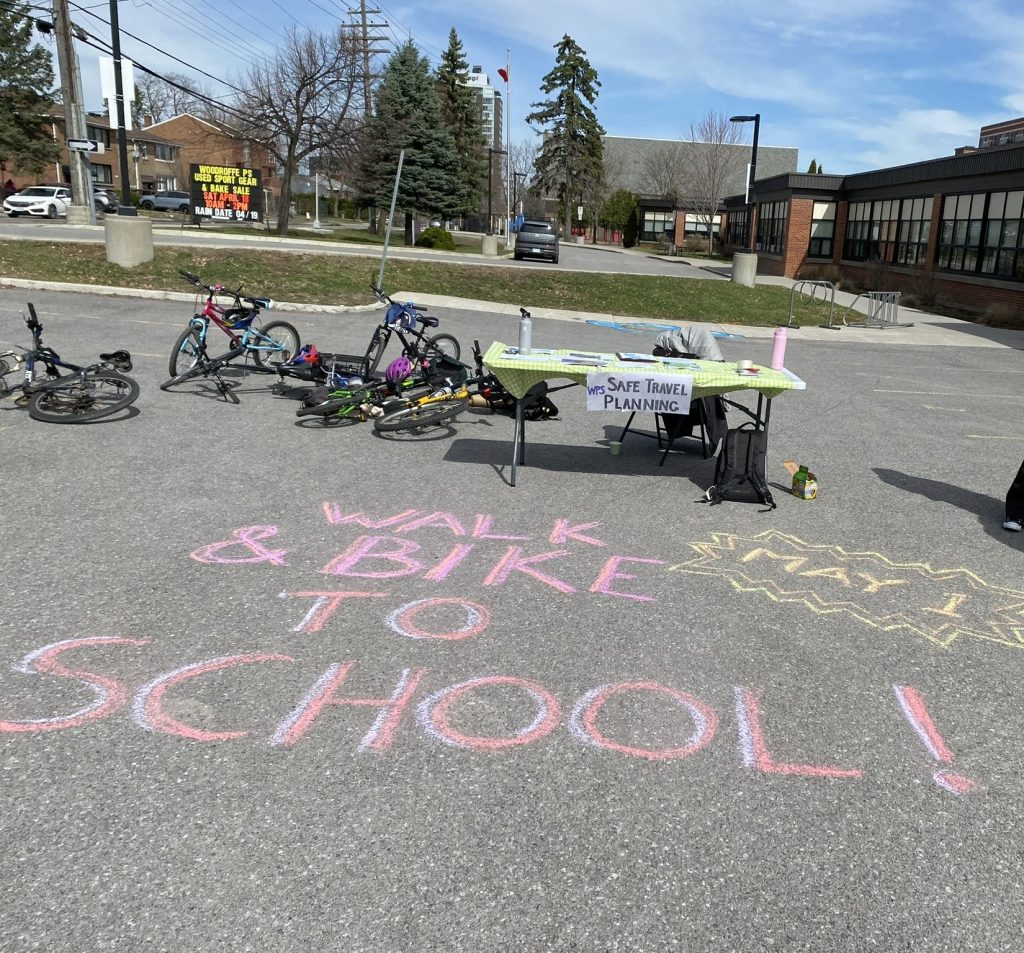
The absence of these measures leads to a vicious cycle, where many parents don’t feel safe letting their children walk to school. Too often, kids end up being driven by their parents, instead of being able to walk with siblings and friends. The province has made our school zones quantifiably less safe, and now is the time to consider creative and strategic solutions to protect our kids.
Submitted by: Eugenie Waters and Christina Bouchard
Eugenie Waters and Christina Bouchard are parents and founding members of Vision Zero Ottawa. Eugenie is a family physician and Chris worked for 10 years in the transportation sector.


Leave a Reply